If you can say that sentence without effort, you're probably a native English speaker. Congratulations.
Recently I have been meeting with a couple guys to help them practice their English- both people who I met because they randomly approached me on campus one day and asked if I spoke English (ah, the joys of being so obviously a foreigner). It is a somewhat entertaining, and also fulfilling, experience. Both Eliseo and Pablo can read pretty well but need help with pronunciation. We went over words that I never considered would be hard to pronounce, like “truth” (that’s a lot of consonants!), “this” (the Th and the short I are both killers), and “squirrel” (oof). We also went over some choice four-letter words and idioms like “sort of” and “oh well.” In exchange, they helped me with rolling my double r’s (a sound which I thought I had down but it turns out I’ve been faking for years), and taught me some other choice phrases.
Last weekend I had another great adventure in the Nicaraguan countryside. Our group took a trip up north to an absolutely breathtaking piece of Mother Nature called Somoto Canyon. The canyon is more like a ravine in between two huge rock faces that was carved out by a river thousands of years ago. We had a guide take us on an epic trek. For the first couple hours we wound our way through the mountain trails until we got to the river, where we loaded all of our stuff into a (semi) waterproof container and, with the help of our life jackets, bobbed around in the currents and let ourselves be carried by the rapids. For probably a couple miles we swam, waded, and climbed over rocks to get down the river. One part of the adventure entailed jumping off a 13-foot cliff into the river in order to bypass a waterfall. I think that was a first for me. The terrain was so rugged, green, and beautiful. It was rejuvenating to be out in the fresh air and, yes, out of the city.
I have five weeks left in Nicaragua, and I have to say I am excited to come home and am glad that it will go by fast. Still, I have lots I want to see and do before I leave, so I am excited to see what other adventures I can cram into my time here.
Until next time!
Friday, October 29, 2010


Monday, October 18, 2010
This One Time, A Cow Almost Ran me into the Lake...
After two weekends in a row of random international trips, I decided to stay in the country this week. Here in Managua, the latest news is that the rainy season is coming to an end, mangoes are almost back in season, and our house just got painted yellow (a tone-down from the previous brilliant orange).
While I may have stayed in the country, I still found my way out of the city. Gabriel, Anna and I went to the nearby town of Granada, on the shore of the gigantic Lake of Nicaragua which takes up about a third of the country’s area. I enjoy that town because it is much smaller, safer, and easier to get around there than in Managua (but what place isn’t?!). I have to say that one of my favorite places there was a real live, actual, Seattle-style coffee shop. This was a big deal because they are hard to come by in Managua. Even though I could care less about coffee, the fresh scent, comfortable chairs, organic menu and colorful gelato assortment were almost too much for me to contain my excitement. I’ve been homesick for reminders of Seattle as of late, and this was a good remedy.
We also went to visit Gabriel’s mom, who still lives in the house he grew up in. This entailed an hour-long bike ride right along the beautiful lake on a road that was sometimes paved, sometimes falling into the lake, and sometimes blocked by cows. I hadn’t ridden a bike in months and I really enjoyed it, when I wasn’t nearly falling off the bike because my tire hit a piece of trash or stopped abruptly in a patch of sand. Riding along the lake, with the views of the green volcanoes across the water, reminded me a little bit of being on Whidbey Island in the summer and looking onward to green mountains. His mom lives in a simple concrete house right on the lake, so we splashed around a bit and ate a delicious lunch of fried fish (a Nicaraguan waterfront favorite), fried plantains (classic), rice, and beans (even more classic).
Back on the home front, I think my host mom and I have started to enjoy each other’s company more and are getting along well. And my host grandpa (her brother, so maybe my uncle?) is just as old and cute, but strange, as ever. I think if I ever write a novel I have some good characters already sketched out. He refers to everything I eat as “chompipe” (turkey), every potential thief as a “pirata,” (pirate), and everyday he tells the dog “No mereces mi cariño!” (You don’t deserve my affection!). In general, our conversations consist of him going on about how dangerous this or that is (“muy peligroso”), or about how natural disasters are the will of God, while I try to casually hint that I’m trying to do homework. Conversely, when I have a free hour I occasionally dare to initiate a conversation and he asks me to repeat myself five times before proceeding to answer a completely unrelated question. You never know quite what you’re going to get, so it’s always an adventure!
When I’m not arguing with old men about whether or not cold water is bad to drink when you’re sick, I’ve been doing a lot of reflecting about the reality of Nicaraguan society as I prepare to write my final papers. Recently it has begun to weigh on me just how serious Nicaragua’s economic problems are. I could have told you that before coming here, but it has started to strike me in a more personal, emotional way. As much as I am frustrated by constantly being the target of crime (I am up to 2 successful robberies and 2 attempts!), I see that there are simply no jobs here. Students at school are getting degrees without knowing if they will ever use them. It goes to show that education alone is not the key to development, if there is nothing to do with that education once you’ve graduated. As much as I am always happy to see the men pushing the Eskimo ice cream carts up and down the streets, I wonder how a 40-year old man who probably has several kids feels to be spending his life on a rather mundane, unskilled task. I suppose I take it for granted that I’ve always assumed I’ll dedicate my life to a job that both makes a difference in the world and is personally satisfying and challenging, not to mention that pays enough to live decently. I just about went crazy after two years at Jamba Juice. While I suppose the people juggling fire in the streets or wearing clown costumes around the mall are probably grateful to have an income, I wonder if it gives them dignity or satisfaction, or if they ever thought they would do something more.
As a final note, I’m trying to decide what to be for Halloween, and how to procure a costume. While it’s not officially celebrated here, there are enough foreigners in town to put on an event or two, and there is enough American influence that Nicaraguans are curious about how we dress up, what pumpkin carving is all about, and why the heck we let our kids accept candy from strangers.
What’s everyone dressing up as for Halloween?
While I may have stayed in the country, I still found my way out of the city. Gabriel, Anna and I went to the nearby town of Granada, on the shore of the gigantic Lake of Nicaragua which takes up about a third of the country’s area. I enjoy that town because it is much smaller, safer, and easier to get around there than in Managua (but what place isn’t?!). I have to say that one of my favorite places there was a real live, actual, Seattle-style coffee shop. This was a big deal because they are hard to come by in Managua. Even though I could care less about coffee, the fresh scent, comfortable chairs, organic menu and colorful gelato assortment were almost too much for me to contain my excitement. I’ve been homesick for reminders of Seattle as of late, and this was a good remedy.
We also went to visit Gabriel’s mom, who still lives in the house he grew up in. This entailed an hour-long bike ride right along the beautiful lake on a road that was sometimes paved, sometimes falling into the lake, and sometimes blocked by cows. I hadn’t ridden a bike in months and I really enjoyed it, when I wasn’t nearly falling off the bike because my tire hit a piece of trash or stopped abruptly in a patch of sand. Riding along the lake, with the views of the green volcanoes across the water, reminded me a little bit of being on Whidbey Island in the summer and looking onward to green mountains. His mom lives in a simple concrete house right on the lake, so we splashed around a bit and ate a delicious lunch of fried fish (a Nicaraguan waterfront favorite), fried plantains (classic), rice, and beans (even more classic).
Back on the home front, I think my host mom and I have started to enjoy each other’s company more and are getting along well. And my host grandpa (her brother, so maybe my uncle?) is just as old and cute, but strange, as ever. I think if I ever write a novel I have some good characters already sketched out. He refers to everything I eat as “chompipe” (turkey), every potential thief as a “pirata,” (pirate), and everyday he tells the dog “No mereces mi cariño!” (You don’t deserve my affection!). In general, our conversations consist of him going on about how dangerous this or that is (“muy peligroso”), or about how natural disasters are the will of God, while I try to casually hint that I’m trying to do homework. Conversely, when I have a free hour I occasionally dare to initiate a conversation and he asks me to repeat myself five times before proceeding to answer a completely unrelated question. You never know quite what you’re going to get, so it’s always an adventure!
When I’m not arguing with old men about whether or not cold water is bad to drink when you’re sick, I’ve been doing a lot of reflecting about the reality of Nicaraguan society as I prepare to write my final papers. Recently it has begun to weigh on me just how serious Nicaragua’s economic problems are. I could have told you that before coming here, but it has started to strike me in a more personal, emotional way. As much as I am frustrated by constantly being the target of crime (I am up to 2 successful robberies and 2 attempts!), I see that there are simply no jobs here. Students at school are getting degrees without knowing if they will ever use them. It goes to show that education alone is not the key to development, if there is nothing to do with that education once you’ve graduated. As much as I am always happy to see the men pushing the Eskimo ice cream carts up and down the streets, I wonder how a 40-year old man who probably has several kids feels to be spending his life on a rather mundane, unskilled task. I suppose I take it for granted that I’ve always assumed I’ll dedicate my life to a job that both makes a difference in the world and is personally satisfying and challenging, not to mention that pays enough to live decently. I just about went crazy after two years at Jamba Juice. While I suppose the people juggling fire in the streets or wearing clown costumes around the mall are probably grateful to have an income, I wonder if it gives them dignity or satisfaction, or if they ever thought they would do something more.
As a final note, I’m trying to decide what to be for Halloween, and how to procure a costume. While it’s not officially celebrated here, there are enough foreigners in town to put on an event or two, and there is enough American influence that Nicaraguans are curious about how we dress up, what pumpkin carving is all about, and why the heck we let our kids accept candy from strangers.
What’s everyone dressing up as for Halloween?
Monday, October 11, 2010
Coming Full Circle
Hi everyone! This past week has rewarding, frustrating, redemptive, and refreshing. Here are some of my musings:
School this past week has led me to some frustrating realizations. I got a midterm back from my Latin American Reality class, and did quite possibly the worst I've ever done on a test. Please note, during the entire test there were loud speakers about 100 feet away blasting Lady Gaga (I've learned not to ask why anymore). As much as I love her music at the right time, she doesn't help me remember what factors influenced Simon Bolivar's liberation of South America. Obviously, the Spanish element adds some difficulty, but in addition, the academic culture here is distinct- there are other methods of teaching, taking tests, grading and studying here that just aren't the style I'm used to, so even thought I studied, I didn't study the right way. A lot of our class time is spent reading and summarizing material, whereas I'm used to hearing a lecture and discussing or analyzing things as a class. My plan is just to work my butt off for the next 2 months, be extra diligent about asking questions, and hopefully pull off a B.
On the other hand, I found out I have an A in my Central American history class- which I've never been so relieved to hear. We are starting to write our final research papers in all classes (so far I've got three 15 pagers on the to do list!) and I'm excited because I secretly really love writing research papers and I think it's how I learn best. For one class I'm thinking about investigating the role of liberation theology in Central American revolutions. For another, I'm going to research "brain drain" that occurs as a result of educated and skilled Nicaraguans migrating to the United States, Costa Rica, and the handful of other places they seek out to improve their economic opportunities, but at the expense of Nicaraguans back home who are left with a shortage of doctors, engineers, and teachers.
On Thursday I helped lead the workshop on sexual health for women at Mujeres en Accion. We had about 9 women come, and I felt it went pretty well. They were mostly interested in learning about protection from STIs, so that is what we talked about. The interesting, and sad, thing (in response to a comment about the last post) is that these women are at high risk for STDs, yet most of them are married, so preaching abstinence isn't really practical. Why, then, are they so susceptible to sexually transmitted infections? Thanks to machismo (which exists throughout Latin America, but is especially prevalent in this country known as the "most unfaithful country in Latin America") means that a majority of men cheat on their wives. The male-dominated culture accepts it as normal, but of course women are held to a double standard. This double standard is so bad that if a woman, who assumes her husband is unfaithful, asks to use protection, she can be accused of being the unfaithful one, and with multiple kids to take care of, she isn't in a position to make demands of her husband. This isn't the case with all marriages, but with all too many. However, through organizations like Mujeres en Accion, which empower women to work together and support each other, women are finding ways to deal with the challenges of being female in this society, and realizing that they don't have to be passive victims to this system. Still, the struggle continues, and it is great to see the hope that women have when they come into our building.
Speaking of hope, last weekend I went back to Tegucigalpa, Honduras to visit the place you could call my second (or third? or fourth?) home. I can't believe that two years have passed since I lived there for a summer, teaching kindergarten at AFE. I toured AFE and marveled at the improvements, went to worship at the new building of Pastor Jeony's church, hung out with Rey, Elise, and Elijah, spent time my old friends Roger and Susan, and said hi to lots of (slightly older-looking) kids that I had built relationships with. I also baked cookies, ate frozen yogurt, did yoga, and felt cold- all things that I had not done for a long time. It was a wonderful, beautiful experience and I'm going to do everything I can to go back and spend Thanksgiving with them.
School this past week has led me to some frustrating realizations. I got a midterm back from my Latin American Reality class, and did quite possibly the worst I've ever done on a test. Please note, during the entire test there were loud speakers about 100 feet away blasting Lady Gaga (I've learned not to ask why anymore). As much as I love her music at the right time, she doesn't help me remember what factors influenced Simon Bolivar's liberation of South America. Obviously, the Spanish element adds some difficulty, but in addition, the academic culture here is distinct- there are other methods of teaching, taking tests, grading and studying here that just aren't the style I'm used to, so even thought I studied, I didn't study the right way. A lot of our class time is spent reading and summarizing material, whereas I'm used to hearing a lecture and discussing or analyzing things as a class. My plan is just to work my butt off for the next 2 months, be extra diligent about asking questions, and hopefully pull off a B.
On the other hand, I found out I have an A in my Central American history class- which I've never been so relieved to hear. We are starting to write our final research papers in all classes (so far I've got three 15 pagers on the to do list!) and I'm excited because I secretly really love writing research papers and I think it's how I learn best. For one class I'm thinking about investigating the role of liberation theology in Central American revolutions. For another, I'm going to research "brain drain" that occurs as a result of educated and skilled Nicaraguans migrating to the United States, Costa Rica, and the handful of other places they seek out to improve their economic opportunities, but at the expense of Nicaraguans back home who are left with a shortage of doctors, engineers, and teachers.
On Thursday I helped lead the workshop on sexual health for women at Mujeres en Accion. We had about 9 women come, and I felt it went pretty well. They were mostly interested in learning about protection from STIs, so that is what we talked about. The interesting, and sad, thing (in response to a comment about the last post) is that these women are at high risk for STDs, yet most of them are married, so preaching abstinence isn't really practical. Why, then, are they so susceptible to sexually transmitted infections? Thanks to machismo (which exists throughout Latin America, but is especially prevalent in this country known as the "most unfaithful country in Latin America") means that a majority of men cheat on their wives. The male-dominated culture accepts it as normal, but of course women are held to a double standard. This double standard is so bad that if a woman, who assumes her husband is unfaithful, asks to use protection, she can be accused of being the unfaithful one, and with multiple kids to take care of, she isn't in a position to make demands of her husband. This isn't the case with all marriages, but with all too many. However, through organizations like Mujeres en Accion, which empower women to work together and support each other, women are finding ways to deal with the challenges of being female in this society, and realizing that they don't have to be passive victims to this system. Still, the struggle continues, and it is great to see the hope that women have when they come into our building.
Speaking of hope, last weekend I went back to Tegucigalpa, Honduras to visit the place you could call my second (or third? or fourth?) home. I can't believe that two years have passed since I lived there for a summer, teaching kindergarten at AFE. I toured AFE and marveled at the improvements, went to worship at the new building of Pastor Jeony's church, hung out with Rey, Elise, and Elijah, spent time my old friends Roger and Susan, and said hi to lots of (slightly older-looking) kids that I had built relationships with. I also baked cookies, ate frozen yogurt, did yoga, and felt cold- all things that I had not done for a long time. It was a wonderful, beautiful experience and I'm going to do everything I can to go back and spend Thanksgiving with them.
Monday, October 4, 2010
Ticos, Hippies, and Break Dancers
On the one hand, I have been too busy to write, but on the other, I don't really have any super important thought to express, so I'll give you a pistache (is that the word?) of what's been on my mind and in my agenda in the past week or two:
Last weekend I made a quick trip with Anna to Costa Rica to renew my 90-day tourist visa for Nicaragua (would you believe that 90 days has almost passed?) It was my first time physically walking across a border, and kind of exciting. It is also interesting to see the subtle differences that exist between two cultures, even when they are bordering countries. We observed a bit of the hippie culture on Saturday night when a group of university students performed on the streets, juggling fire and dancing barefoot. The whole town came out to watch and it was a cool sense of community. Later there was a youth break dancing performance in central park. I'm not sure if that's a normal occurrence, but we enjoyed watching it! I haven't seen too many hippies or break dancers in Nicaragua, but maybe I just don't know where to look.
In addition, we listened to our Peruvian hostel owner rant about stingy European tourists, had a cop give us a tour of an old army fortress, paid with coins that came in denominations up to 500, and ordered pizza, where we found out that albahaca is not, in fact, artichoke, as we had hoped, but basil. It was still good!
This Thursday at my volunteer place I'll be helping to facilitate a discussion for women on sexual health. The women I work with told me that lots of women in the neighborhood have misconceptions about birth control or STDs, and need some basic information on how to protect themselves, as well as how to have fewer children, because having too many kids quickly becomes a poverty trap. I've been studying a really nifty book they gave me called Nuestros Cuerpos, Nuestras Vidas (Our Bodies, Our Lives), which is specially written for Latina women around the world. I'm learning interesting things about the way that sex and femininity are viewed in Latin America. There are so many factors that influence whether or not a woman uses contraceptives or protection: cultural stigmas, lack of control in the relationship, or religious rules. I'm trying to prepare really well because it wil not be as simple as saying "take the pill," etc, but I hope that the discussion is helpful for them.
Well, those are my musings for now. It is very late and I should get to bed before I stop making sense (hopefully that moment hasn't already passed?)
Love to all!
Last weekend I made a quick trip with Anna to Costa Rica to renew my 90-day tourist visa for Nicaragua (would you believe that 90 days has almost passed?) It was my first time physically walking across a border, and kind of exciting. It is also interesting to see the subtle differences that exist between two cultures, even when they are bordering countries. We observed a bit of the hippie culture on Saturday night when a group of university students performed on the streets, juggling fire and dancing barefoot. The whole town came out to watch and it was a cool sense of community. Later there was a youth break dancing performance in central park. I'm not sure if that's a normal occurrence, but we enjoyed watching it! I haven't seen too many hippies or break dancers in Nicaragua, but maybe I just don't know where to look.
In addition, we listened to our Peruvian hostel owner rant about stingy European tourists, had a cop give us a tour of an old army fortress, paid with coins that came in denominations up to 500, and ordered pizza, where we found out that albahaca is not, in fact, artichoke, as we had hoped, but basil. It was still good!
This Thursday at my volunteer place I'll be helping to facilitate a discussion for women on sexual health. The women I work with told me that lots of women in the neighborhood have misconceptions about birth control or STDs, and need some basic information on how to protect themselves, as well as how to have fewer children, because having too many kids quickly becomes a poverty trap. I've been studying a really nifty book they gave me called Nuestros Cuerpos, Nuestras Vidas (Our Bodies, Our Lives), which is specially written for Latina women around the world. I'm learning interesting things about the way that sex and femininity are viewed in Latin America. There are so many factors that influence whether or not a woman uses contraceptives or protection: cultural stigmas, lack of control in the relationship, or religious rules. I'm trying to prepare really well because it wil not be as simple as saying "take the pill," etc, but I hope that the discussion is helpful for them.
Well, those are my musings for now. It is very late and I should get to bed before I stop making sense (hopefully that moment hasn't already passed?)
Love to all!
Tuesday, September 28, 2010
10,000 words worth
This week has been busy with midterms, studying, etc, among other things, so I haven't written for awhile. But I finally got some pictures off of my friend Anna who I traveled to the coast with, so here are some of my favorites:
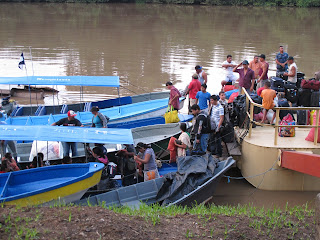
The ridiculous boats we rode for 2 hours to get to the town of Bluefields, after the 6 hour bus ride.

Waiting for the boat to leave. Keeping it cool as always.
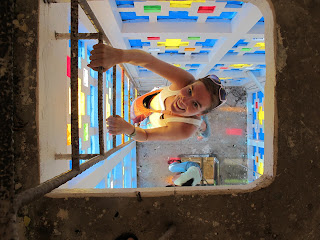
Climbing up the church bell tower to get a view...
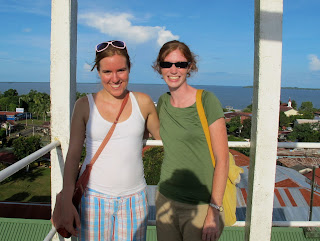
The view! With my travel buddy, Anna
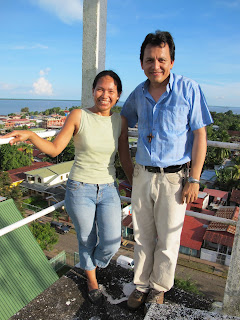
The priest and church worker who showed us the bell tower and invited us to lunch the next day
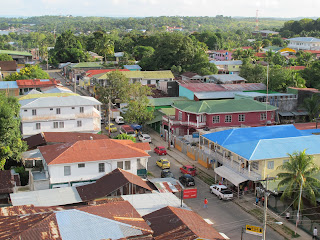
Bluefields
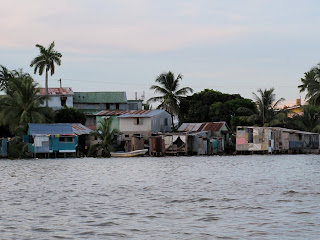
(1233-1) We did lots of boat riding and got some good views from the water.
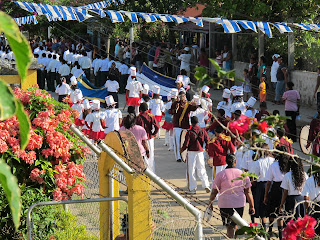
The infamous early morning marching band.
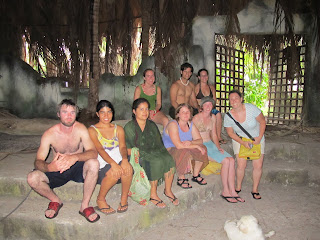
The group we traveled with for a bit, at the Survivor set!
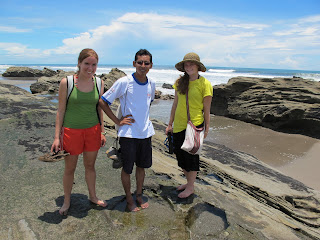
This is from a day trip to the Pacific Coast, but I thought you might want to see a picture of Gabriel, the guy (of last posts's fame) who I've started dating (I suppose he also accounts for some of last week's busyness!)

The ridiculous boats we rode for 2 hours to get to the town of Bluefields, after the 6 hour bus ride.

Waiting for the boat to leave. Keeping it cool as always.

Climbing up the church bell tower to get a view...

The view! With my travel buddy, Anna

The priest and church worker who showed us the bell tower and invited us to lunch the next day

Bluefields

(1233-1) We did lots of boat riding and got some good views from the water.

The infamous early morning marching band.

The group we traveled with for a bit, at the Survivor set!

This is from a day trip to the Pacific Coast, but I thought you might want to see a picture of Gabriel, the guy (of last posts's fame) who I've started dating (I suppose he also accounts for some of last week's busyness!)
Monday, September 20, 2010
What's your story?
“Dame un cordoba,” the little girl said, extending a tiny, dirty hand. I reached into my pocket and pulled out the 50 centavos I had, worth about 3 cents, and hoped she would believe me when I said it was all I could give her. It wouldn’t be a good idea to go digging through my purse on a busy street. I was with my friend Gabriel, who was taking me on a walking tour of the old part of Managua, but as I hurried to keep pace with him she followed me.
“It’s all I have,” I told her apologetically. I still wasn’t sure the best way to handle begging kids on the street, but I knew that dishing out money right and left wasn’t the best strategy. In Seattle I make a point of stopping and talking to homeless people, but I’m more cautious about talking to strangers in Managua. At least that’s how I rationalized it during our quick encounter. I suppose smiling and moving on was the easiest option.
She brushed her long brown hair off of her face and turned to Gabriel, again asking for a Cordoba, which is worth about 5 cents. He paused for a minute and pointed to the statue on the street corner where we were standing.
“If I give you money, you have to tell me a story about that statue over there.”
“What?”
“Tell me a story. I’m giving my friend here a tour of the city, and we want to hear a good story about the city. You can make it up if you want. Just be creative.”
Her face changed from surprise, to confusion, to delight, to mischief. “Um… my friend will tell you a story,” she offered. Just then another little girl walked up, about the same age, barefooted, holding a window squeegee which she was using to clean windows of cars stopped at the stoplight, in hopes that drivers would tip her a Cordoba or two. Window washers, vendors, and street performers account for the occupations of many of Nicaragua’s poor, who find creative, informal ways to make money.
“Tell me a story,” Gabriel said again. He sat down under the shadow of the statue, showing that he was in no hurry, and the girls shyly joined him, all giggles and grins, as he began to ask them questions to get conversation going.
I don’t think they ever got to telling us a story. But I do know that for a few minutes on a busy, dirty street corner in the middle of Managua, two little girls took a break from their weekend labor and got to be kids again- smiling, laughing, interacting with someone who showed interest in them. We both managed to find a few more cordobas to give them for lunch. I still don’t know the most socially just way to deal with giving money to begging kids. But I do know that I will not let myself make excuses again to treat them as anything less than the precious, beautiful children of God that they are.
The next time you are faced with a homeless person or just someone who needs a listening ear, I challenge you to sit down and learn something from them!
(Note: there are more new posts below)
“It’s all I have,” I told her apologetically. I still wasn’t sure the best way to handle begging kids on the street, but I knew that dishing out money right and left wasn’t the best strategy. In Seattle I make a point of stopping and talking to homeless people, but I’m more cautious about talking to strangers in Managua. At least that’s how I rationalized it during our quick encounter. I suppose smiling and moving on was the easiest option.
She brushed her long brown hair off of her face and turned to Gabriel, again asking for a Cordoba, which is worth about 5 cents. He paused for a minute and pointed to the statue on the street corner where we were standing.
“If I give you money, you have to tell me a story about that statue over there.”
“What?”
“Tell me a story. I’m giving my friend here a tour of the city, and we want to hear a good story about the city. You can make it up if you want. Just be creative.”
Her face changed from surprise, to confusion, to delight, to mischief. “Um… my friend will tell you a story,” she offered. Just then another little girl walked up, about the same age, barefooted, holding a window squeegee which she was using to clean windows of cars stopped at the stoplight, in hopes that drivers would tip her a Cordoba or two. Window washers, vendors, and street performers account for the occupations of many of Nicaragua’s poor, who find creative, informal ways to make money.
“Tell me a story,” Gabriel said again. He sat down under the shadow of the statue, showing that he was in no hurry, and the girls shyly joined him, all giggles and grins, as he began to ask them questions to get conversation going.
I don’t think they ever got to telling us a story. But I do know that for a few minutes on a busy, dirty street corner in the middle of Managua, two little girls took a break from their weekend labor and got to be kids again- smiling, laughing, interacting with someone who showed interest in them. We both managed to find a few more cordobas to give them for lunch. I still don’t know the most socially just way to deal with giving money to begging kids. But I do know that I will not let myself make excuses again to treat them as anything less than the precious, beautiful children of God that they are.
The next time you are faced with a homeless person or just someone who needs a listening ear, I challenge you to sit down and learn something from them!
(Note: there are more new posts below)
Living History
Hello everyone! I’ve had quite a few thoughtful experiences this week, so lots to update on. So I started volunteering last Thursday at Mujeres en Accion, Women in Action. I think I’m going to like it. I spent the first half of the day chopping vegetables for the large meal which was distributed to women around the community. Though a simple task, I enjoyed cooking, which I haven’t done much of here, and used the time to get to know some of the women who work there. The second half of the day I spent helping women fill out applications for microloans. If you’re not familiar with microfinance, it’s the practice of giving small loans to women in poor areas (as research shows that women are more responsible with money, and the loans give them power that they would otherwise lack at home), so they may start businesses or improve on existing ventures. Credit is very hard to come by for poor people, but sometimes $100 is all that stands between a woman and a new sewing machine that will allow her to sew much faster and bring in $25 more per week. In general microfinance has shown to be a successful method of poverty alleviation and when women pay back loans, they are left with feelings of self-satisfaction, as well as the ability to generate additional income. I’ve studied microfinance quite a bit but have never seen it actually put into practice, so I enjoyed being a part of the process. The women all seem so hopeful to be trusted with the money and given a chance to improve life for their families.
In my free time (which is becoming less frequent) I’m reading a book, Dreams of the Heart, which is an autobiography of a famous woman in Nicaraguan history, Violeta Barrios de Chamorro. Most recently, she was president of Nicaragua beginning in 1990, but before that, she was married to Pedro Joaquin Chamorro, the resistance leader whose assassination in 1978 set the spark for the people of Nicaragua to join together to topple one of the longest and most oppressive dictatorships in Latin American history, the Somoza dynasty. Reading her account of the political rallies, boycotts, and secret meetings that occurred during those tense years of the escalation of the revolutionary movement has given me a new appreciation for living in Managua. Students at the UNAN, the school I attend, led several protests which were instrumental in garnering public support for the movement. Mrs. Barrio’s son attended a school in my neighborhood. As I read the names of places and people which were key to the movement, I identify with it because I’ve been to that place or have read that name on a memorial around the city.
The Managua of today is not as unified as it was during the glorious people’s victory of 1979. Poverty, inequality, and crime continue their downward path. Still, I can only hope that the people of this city take pride in the legacy that lives on and remember that one time, everybody managed to come together for something good.
In other news, I’ve generated a new list. (yes!) Knock-off brands are very popular in Nicaragua. They usually take the name of a famous American brand and use the same logo, but change a few letters. I don’t know if I’m not supposed to notice, but it is funny to see the names prominently displayed on products when they are obviously not the originals. Among my favorites:
Pizza Hot
Burguer Queen
On backpacks: Samsport; Joysport
On tee shirts: Holistar
See below for new pictures!
In my free time (which is becoming less frequent) I’m reading a book, Dreams of the Heart, which is an autobiography of a famous woman in Nicaraguan history, Violeta Barrios de Chamorro. Most recently, she was president of Nicaragua beginning in 1990, but before that, she was married to Pedro Joaquin Chamorro, the resistance leader whose assassination in 1978 set the spark for the people of Nicaragua to join together to topple one of the longest and most oppressive dictatorships in Latin American history, the Somoza dynasty. Reading her account of the political rallies, boycotts, and secret meetings that occurred during those tense years of the escalation of the revolutionary movement has given me a new appreciation for living in Managua. Students at the UNAN, the school I attend, led several protests which were instrumental in garnering public support for the movement. Mrs. Barrio’s son attended a school in my neighborhood. As I read the names of places and people which were key to the movement, I identify with it because I’ve been to that place or have read that name on a memorial around the city.
The Managua of today is not as unified as it was during the glorious people’s victory of 1979. Poverty, inequality, and crime continue their downward path. Still, I can only hope that the people of this city take pride in the legacy that lives on and remember that one time, everybody managed to come together for something good.
In other news, I’ve generated a new list. (yes!) Knock-off brands are very popular in Nicaragua. They usually take the name of a famous American brand and use the same logo, but change a few letters. I don’t know if I’m not supposed to notice, but it is funny to see the names prominently displayed on products when they are obviously not the originals. Among my favorites:
Pizza Hot
Burguer Queen
On backpacks: Samsport; Joysport
On tee shirts: Holistar
See below for new pictures!
Subscribe to:
Comments (Atom)